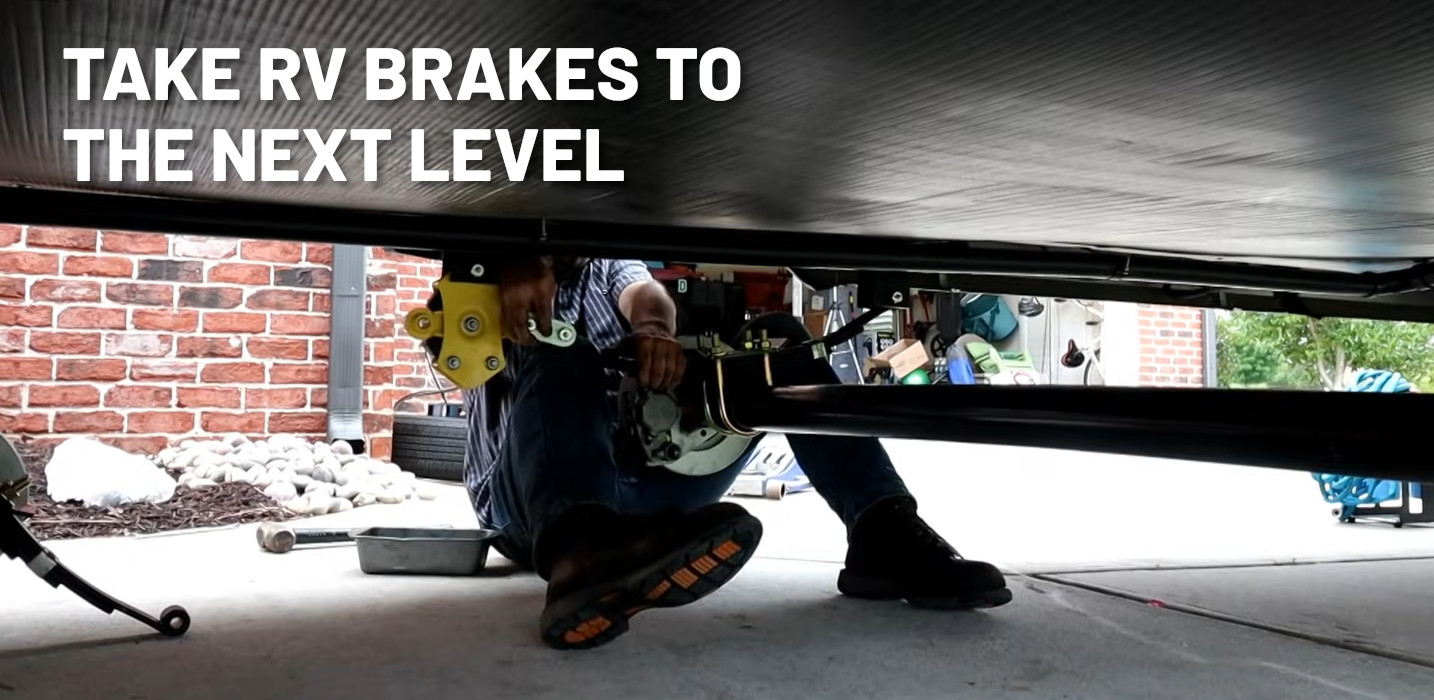
The Complete Guide to Replacing a Trailer Axle
Share article
Replacing a trailer axle involves safely lifting and supporting the trailer, removing wheels and suspension hardware, positioning a correctly sized replacement axle, and reinstalling all components to manufacturer torque specifications. When done properly, axle replacement restores safe towing, prevents uneven tire wear and helps protect your trailer’s suspension and braking system.
This guide explains how to replace a trailer axle step by step, whether you’re working on a travel trailer, utility trailer or boat trailer. It also helps you decide when to replace the entire axle assembly versus individual components like the axle beam, hubs, leaf springs or hanger hardware. Throughout the process, we highlight safety precautions, required tools and common installation mistakes that can affect alignment, braking performance and long‑term reliability.
If your trailer shows signs like uneven tire wear, bent axle tubes, damaged spindles or recurring brake and bearing issues, replacing the axle may be the safest and most cost‑effective solution. By following the instructions in this guide and confirming the correct axle specifications before installation, trailer owners can complete axle replacement confidently—or know when professional installation may be the better option.
Trailer axle (commonly misspelled as trailer axel) replacement may sound intimidating, but it doesn’t have to be. Whether you’re replacing the axle for trailers on your full-size RV, a small utility trailer axle, or boat trailer axles, this guide lays out the steps needed to complete the process from start to finish.
Before installing a new trailer axle, make sure you have the tools needed for the job and the right axle to fit your rig.
Contents
- Complete axle replacement video
- Axle replacement safety checklist
- Replacing an axle step by step
- Post-installation checklist
- Common axle replacement mistakes to avoid
- How to replace an axle beam
- How to replace an axle hub
- How to replace a leaf spring
- How to replace axle hanger hardware
- Axle replacement FAQs
Which Axle Component Are You Replacing?
Axle Replacement Safety Checklist
Trailer axle replacement requires safely supporting the trailer on level ground, using jack stands instead of relying on a jack alone, planning brake wiring disconnection if applicable, and documenting the original setup before removal.
Trailer axle work happens under heavy loads. Before you begin:
- Park on level ground and secure the trailer.
- Lift only from approved points and support the trailer with jack stands—don’t rely on a jack alone.
- If your axle has electric brakes, plan for wiring disconnect/reconnect so you don’t snag wires during removal.
- Take photos of the original setup (wiring routing, hardware stack order) to speed up reassembly.
Tool Checklist to Avoid Mid-job Surprises
Having the right tools ready reduces downtime and makes the job safer:
- Floor jack + jack stands
- Lug wrench / impact + sockets
- Breaker bar or wrench set
- Torque wrench (for reassembly / fastener torquing)
- Wire connectors / tools (if electric brakes)
- Penetrating oil (for rusty hardware)
12 Simple Steps for Replacing a Trailer Axle Assembly
Replacing a trailer axle involves lifting and supporting the trailer, removing wheels and suspension hardware, sliding out the old axle, installing the new axle in the correct orientation, reconnecting components, and torquing all fasteners to specification.
Before you start the trailer axle replacement process, make sure your trailer is parked on level ground.


Step 1: Jack up the trailer
Use a floor jack to lift the trailer by the frame, following the trailer manufacturer’s specifications. Make sure the trailer is supported with jack stands.
Step 2: Remove the wheels
Using an impact driver, breaker bar or wrench, remove all of the lug nuts from the wheel. Then, remove the wheel from the hub. If your trailer is especially rusty, this step may require a little extra elbow grease. Remove the wheels from both sides of the trailer and set them aside.
Step 3: Cut the power and ground wires
This step will not apply if the axle you’re replacing is an idler axle. However, if your axle is equipped with electric trailer brakes, you’ll need to locate the power wire and ground wire. These wires will need to be cut to avoid snagging while removing the old axle. We’ll reconnect them to the new axle later.


Step 4: Jack up the axle
Using your floor jack again, lift up the axle beam at the center point. Be careful not to further damage the axle. Lift until the axle is raised enough to take pressure off the shackles on the ends. Then, place jack stands under the axle beam to support it.
Step 5: Remove the shackles
With the axle properly supported, you can start to remove the bolts securing the shackles to the leaf springs. Once the nuts are removed, the bolts may need to be tapped out of their holes using a mallet and punch. With shackles removed, it is a good idea to inspect them for signs of wear or damage. Replace the shackles if necessary.


Step 6: Remove the hanger bolts
Follow the same procedure as step 5 to remove the shoulder bolts securing the leaf springs to the hangers. Remember to inspect and replace parts if needed.
Step 7: Lower the axle
With all attaching bolts removed, lift the axle up at its center point once more, using your floor jack. Once it clears the jacks stands, slide them out. Then, lower the axle back down all the way to the floor and slide it out from under the trailer.


Step 8: Raise the new axle into position
Slide your new axle assembly under the trailer, carefully resting it on its center point on the floor jack. Be sure to check that the axle is facing the correct direction! On Lippert axles, the ID tag should be facing toward the back of the trailer. Next, slowly raise it into the proper position, making adjustments as needed to line it up with the mounting points. Finally, with the axle positioned correctly, support it with the jack stands.
Step 9: Reattach the leaf springs
Starting with the hanger bolts, reattach the leaf springs to the trailer. You may need to make some fine adjustments to get the eyelets of your leaf springs to line up with the holes. Install the bolts in the hanger brackets first, and then reinstall the shackles, making sure to secure both sides of the trailer. It is also recommended that you apply grease to the bolts when reinstalling. Some bolts have a grease zerk that allows application using a grease gun. Standard bolts will need grease applied directly to the shaft before installation. Only finger-tighten until all the hardware has been replaced.


Step 10: Torque the hardware to the correct valves
Using a torque wrench, tighten the shackle bolts to 30-50 foot-pounds. Then, torque the hanger bolts. You will likely need to use a wrench on the bolt head while you apply the torque wrench to the nut.
Step 11: Reconnect your trailer brake wires
Now that your axle assembly is fully secured, you can rewire the trailer brakes. Splice the power wires together first, using a scotch lock. Make sure the fitting is tightly crimped! Then, splice the ground wires together using the same method.
Step 12: Reinstall the wheels
Place each wheel onto its new respective axle hub, and finger-tighten the lug nuts. Then, use your impact wrench to tighten the lugs down further, following a star-shaped pattern. For proper torquing, we recommend lifting the trailer frame once more off the jack stands, and lower it until the tires are firmly on the ground. This will keep the wheels from spinning while you torque the nuts to the correct values. Again, follow a star-shaped pattern, and be sure to reference your owner’s manual for the proper torque values.
After Installation: What to Check Before Your First Tow
Before towing, verify brake operation, visually confirm alignment, recheck critical fasteners after a short drive, and monitor early tire wear for signs of suspension or alignment issues.
Once the new axle is in place and the wheels are back on:
- Verify brake operation (if equipped). Confirm wiring is secure and protected from road abrasion.
- Do a visual alignment check: tires should appear square in the wheel wells and track straight on a short, slow test pull.
- Re-check critical fasteners after a short shakedown drive. It’s common practice to re-verify torques after components settle (use your owner’s manual specs).
- Watch tire wear early. Uneven wear returning quickly can indicate a deeper suspension or hanger alignment issue, not just the axle.
Common Trailer Axle Replacement Mistakes
The most common axle replacement mistakes include installing the axle backward, overlooking brake wiring, torquing hardware too early, and failing to properly torque wheels after installation.
Mistake #1: Installing the axle backward.
On Lippert axles, a simple check is the ID tag orientation — tag faces toward the back of the trailer.
Mistake #2: Forgetting brake wiring planning.
If your axle has electric brakes, you’ll cut / disconnect power and ground during removal and then reconnect / splice after the new axle is secured.
Mistake #3: Torquing suspension hardware too early.
During reassembly, it’s smart to get all hardware installed first, then torque to spec. This helps alignment and reduces binding.
Mistake #4: Reinstalling wheels without final torque.
Finger-tighten, snug in a star pattern, then do final torque when the tire is stabilized on the ground (and always follow the trailer/OEM specs).


How to Replace a Trailer Axle Beam
The trailer axle beam is the center portion of the axle, the cylindrical tube component that spans the width of the trailer, connecting one hub to the other. The axle beam can be replaced without having to replace the entire axle assembly, following the steps provided in the video below.
How to Replace an Axle Hub
The brake hub is the endcap portion of the trailer axle. It is the circular component onto which the wheel is bolted, allowing it to spin freely and smoothly. Trailer axle hub replacement can be completed independent of the axle beam and other suspension components.
How to Replace Trailer Leaf Springs
Replacing trailer leaf springs may sound intimidating, but it’s actually a fairly simple and straightforward task. Follow along with the video below to familiarize yourself with the process. Be sure to refer to the owner’s manual of your own unit for specific details and recommendations.
How to Replace the Hanger Attachment Hardware
The attaching hardware connects the leaf springs and equalizers to the hangers and trailer frames. Sometimes, this hardware becomes worn or damaged and needs replacing. The video below shows how to replace the attaching hardware or AP kit.
Frequently Asked Questions About Axle Replacement
-
How do I know if my trailer axle needs to be replaced?
Common signs that indicate it may be time to replace a trailer axle include uneven tire wear, bent or damaged axle tubes, excessive rust or corrosion, damaged spindles, or recurring bearing and brake issues. If your trailer consistently pulls to one side or you notice abnormal tire camber, the axle may be compromised and should be inspected or replaced.
-
Can I replace a trailer axle myself, or should I hire a professional?
Many DIY‑minded trailer owners can replace a trailer axle themselves using basic tools, proper safety equipment, and the correct replacement axle. However, if your trailer has multiple axles, electric brakes, or suspension damage, professional installation may help ensure proper alignment, brake function, and long‑term safety.
-
What information do I need to order the correct replacement trailer axle?
Ordering the correct replacement axle requires knowing the axle’s weight capacity, hub face measurement, spring center measurement, brake or idler configuration, and suspension type. Many Lippert axles include an axle tag ID, which can be used to identify an exact replacement or compatible upgrade without guesswork.
-
Is it better to replace the entire axle or just individual components?
Replacing individual components such as hubs, bearings, brakes, or leaf springs may be sufficient when the axle beam itself is still in good condition. If the axle tube is bent, cracked, or severely corroded, replacing the entire axle assembly is typically the safest and most reliable solution, helping prevent alignment issues and premature tire wear.
-
How long does it take to replace a trailer axle?
Replacing a single trailer axle usually takes a few hours for someone familiar with the process. The total time can vary depending on the trailer’s size, axle configuration, brake wiring, and whether additional suspension or hardware components are replaced during the installation.
-
Do I need to replace both axles on a tandem‑axle trailer at the same time?
It is not always required, but replacing both axles at the same time is often recommended when they have similar age, mileage, and wear. Doing so can help maintain even load distribution, consistent braking performance, and uniform suspension geometry across the trailer.
-
Will replacing my trailer axle affect alignment or tire wear?
Installing the correct axle with proper measurements is essential for maintaining alignment and preventing uneven tire wear. An incorrectly sized or improperly installed axle can cause tracking issues, rapid tire degradation, and handling problems, which is why accurate measurements and proper installation are critical.
-
Can I upgrade my trailer axle instead of replacing it with the same one?
In some cases, trailer owners may choose to upgrade axle capacity, brakes, or suspension components during replacement. Any upgrade must be compatible with the trailer frame and suspension ratings to ensure safety and compliance. Verifying these limits before upgrading helps prevent overloading and structural damage.
-
Do replacement trailer axles come with brakes and hubs?
Replacement trailer axles may be sold either as bare axle beams or as complete axle kits that include hubs, brakes, springs, and mounting hardware. Choosing a complete axle kit can simplify installation and help ensure all components are properly matched and ready to install.
-
What safety steps should I take before replacing a trailer axle?
Before beginning axle replacement, the trailer should be parked on level ground, wheels should be securely chocked, and the frame must be properly supported with jack stands. Any electric brake wiring should be disconnected as needed to prevent damage during removal and installation. These steps help reduce the risk of injury and equipment damage.
-
Where can I find help identifying or installing my trailer axle?
Lippert provides detailed axle identification resources, step‑by‑step replacement guides, and instructional videos covering axle installation, suspension measurements, and brake setup. These resources are designed to help trailer owners select the correct axle and install it properly the first time.