How to Choose the Best Pontoon Boat Ladder
Share article
Choosing the best pontoon boat ladder comes down to more than finding a place to climb back onboard. The right ladder should match your pontoon's layout, support how you use your boat, and create a safer, more comfortable boarding experience for everyone on board. Whether you spend your weekends swimming at the sandbar, pulling watersports enthusiasts, or enjoying family-friendly days on the water, the right ladder can make boarding easier and help improve accessibility.
Pontoon boats are designed for relaxation and recreation, but not all ladder setups work the same way. Mounting location, ladder style, step depth, and user needs can all influence what works best. Understanding these differences can help boaters choose a ladder that feels dependable before and after every outing.
In This Guide
- Why the Right Ladder Matters
- Pontoon Boat Ladder Definitions
- Common Ladder Mounting Locations
- Types of Pontoon Boat Ladders
- Ladder Size, Step Depth & Comfort
- Material & Weight Capacity Considerations
- Accessibility for Different Passengers
- Installation Considerations
- Matching a Ladder to Your Boating Style
- Maintenance & Durability Tips
- Frequently Asked Questions About the Best Pontoon Boat Ladder
Why the Right Ladder Matters
The best pontoon boat ladder improves safety, accessibility, and comfort while helping passengers move in and out of the water more easily.
Boarding seems simple until conditions become less ideal. Water movement, varying passenger mobility, and changing environments can quickly reveal the strengths or weaknesses of a ladder design. A ladder that feels stable in calm water may become harder to use at a crowded sandbar or after an active day of swimming and watersports.
A well-designed pontoon boat boarding ladder can support:
- Easier boarding after swimming
- More comfortable access for kids and older passengers
- Better stability in changing water conditions
- Improved confidence entering and exiting the water
- Reduced strain while climbing back on deck
The ladder often becomes one of the most frequently used pontoon boat accessories during the boating season. Choosing the right option can have a noticeable impact on the overall experience.

Pontoon Boat Ladder Definitions
Understanding a few basic ladder terms can make it easier to compare options and identify the best ladder for pontoon boats.
Pontoon ladder terminology can vary between manufacturers, but several common categories appear frequently during the buying process.
Boarding Ladder
A boarding ladder is any ladder designed to help passengers safely enter or exit the boat from the water. These can mount at the front, side, or rear of a pontoon depending on layout and intended use.
Boarding ladders are commonly designed with accessibility and ease of use in mind.
Under-Deck Ladder
An under-deck ladder stores beneath the deck when not in use.
These systems help reduce deck clutter and preserve usable space while keeping the ladder accessible when needed.
Telescoping Ladder
A telescoping ladder uses sections that slide and collapse into a compact design.
Because they retract into a smaller footprint, telescoping ladders are commonly used where storage space is limited.
Common Ladder Mounting Locations
Pontoon boat ladder placement can affect boarding comfort, traffic flow, and accessibility.
The best location often depends on the boat's floorplan and how people typically use the space.
Front-Mounted Ladders
Front-mounted ladders are often used when boaters spend time at beaches, shorelines, or shallow-water sandbars.
These locations can create convenient entry and exit points when approaching shore. However, they may be less practical for swimmers entering from open water behind the boat.
Rear-Mounted Ladders
Rear-mounted ladders remain one of the most common configurations for pontoons.
For swimming, tubing, and watersports activities, rear access often creates a natural boarding location. Passengers exiting the water behind the boat can quickly return onboard without walking around seating areas.
Rear-mounted designs also commonly integrate with swim platforms.
Side-Mounted Ladders
Side-mounted ladders can improve access depending on deck design and furniture placement.
These systems may work well when rear access areas are occupied or when specific layouts create limited installation space elsewhere.
When considering rear vs side pontoon ladder placement, traffic flow onboard often becomes the deciding factor.


Types of Pontoon Boat Ladders
Different ladder designs offer different advantages depending on space limitations and boating preferences.
The best ladder for pontoon boats often balances convenience with ease of use.
Telescoping Ladders
Telescoping ladders offer compact storage and a clean appearance.
Benefits can include:
- Space-saving designs
- Retractable storage
- Reduced deck clutter
- Flexible installation locations
Many pontoon owners appreciate telescoping designs because they remain out of the way when not in use.
Fixed-Step Ladders
Fixed-step ladders use permanently spaced steps and maintain a consistent boarding surface.
These systems often appeal to boaters prioritizing simplicity and durability.
Flip-Down & Stowable Ladders
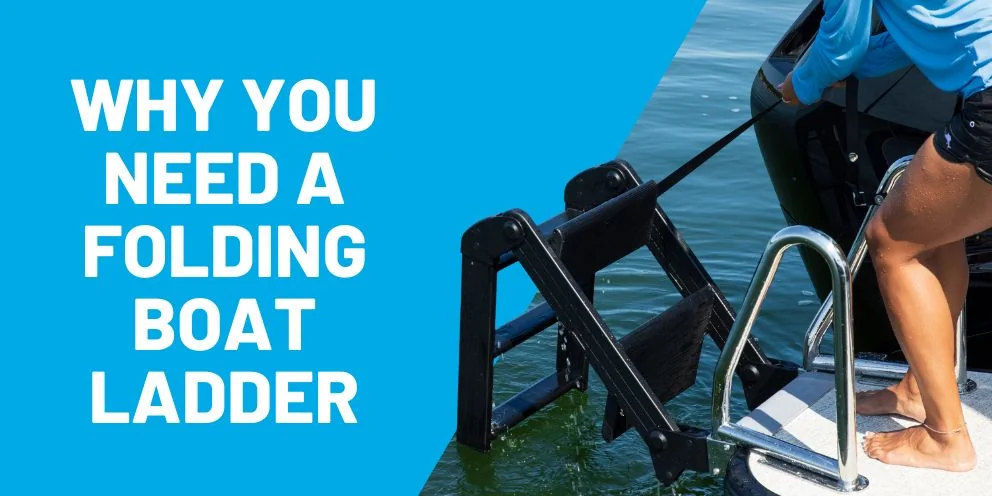
Flip-down and stowable pontoon boat ladder designs fold or rotate into storage positions.
These options help maintain a clean deck layout while remaining quickly accessible during swimming stops.
Ladder Size, Step Depth & Comfort
Ladder dimensions directly affect how comfortable and stable boarding feels.
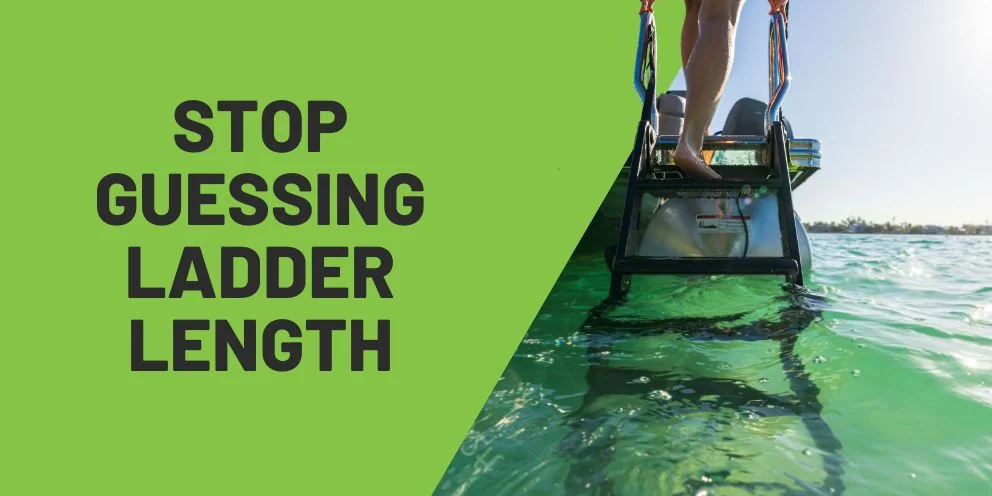
A ladder that reaches deeper into the water can make climbing easier by reducing the distance between the bottom step and the water surface.
Important considerations include:
- Overall ladder length
- Step depth
- Distance between rungs
- Number of steps
- Entry angle
Shallow ladder placement can force swimmers to pull themselves upward instead of stepping naturally. Longer ladders with deeper water access can improve comfort for many passengers. This becomes especially important for older adults, younger children, and anyone with mobility concerns.
Want a closer look at ladder depth and step count? Explore our blog, How Many Steps Should a Boat Ladder Have?, for additional guidance.
Material & Weight Capacity Considerations
Material selection affects long-term durability and environmental performance.
Pontoon ladders regularly face moisture, sun exposure, and changing temperatures, making construction quality important.
Aluminum vs. Stainless Steel
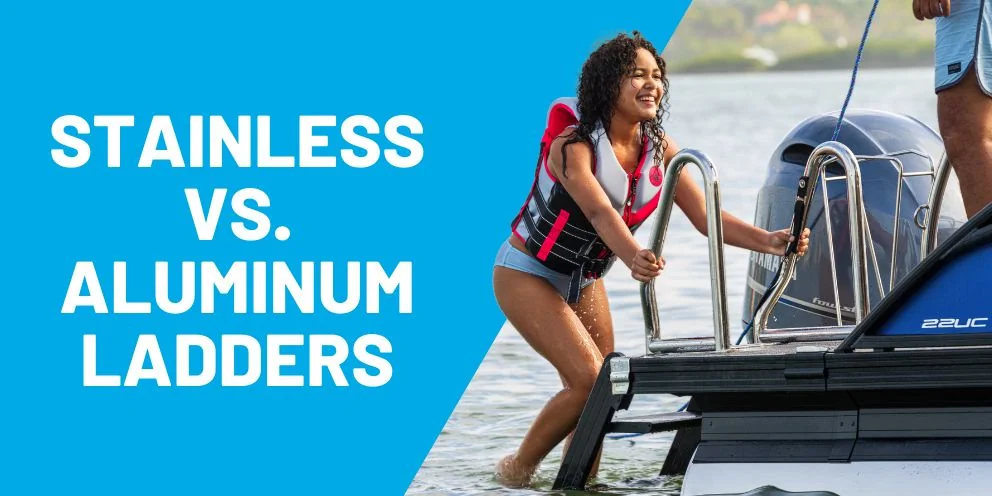
Aluminum ladders are lightweight and commonly used across many pontoon applications.
Benefits include:
- Reduced overall weight
- Corrosion resistance
- Easy handling
- Cost-conscious construction
Stainless steel designs often prioritize strength and premium appearance. They may also provide additional durability in certain marine environments. We dive deeper into this topic here.
Freshwater vs. Saltwater Conditions
Water type can influence ladder longevity.
Freshwater environments generally place less stress on metal components. Saltwater conditions can accelerate corrosion if materials and finishes are not designed for those environments.
Marine-grade materials and dependable finishes can help support long-term durability.
Accessibility for Different Passengers
The best pontoon boat boarding ladder should work comfortably for everyone onboard.
Not every passenger approaches boarding with the same needs. Mobility, height, confidence levels, and physical strength can all affect how easy a ladder feels to use.
Kids
Children often benefit from:
- Wider steps
- Consistent rung spacing
- Stable handholds
- Lower climbing effort
Older Adults
Older passengers may appreciate:
- Deeper steps
- Additional hand support
- Longer ladders
- Reduced climbing angles
Pets
Families boating with dogs should also consider boarding comfort.
Some pet owners use purpose-built systems designed to provide easier water access for pets. Planning for every passenger can help create a more enjoyable experience during family-friendly days on the water.

Installation Considerations
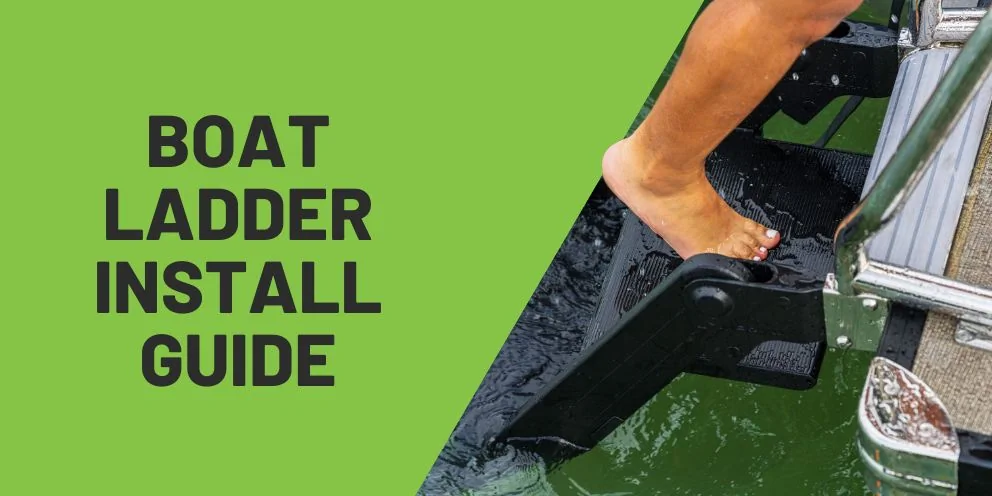
Ladder compatibility depends heavily on pontoon layout and available mounting space.
Before selecting a ladder, boaters should review deck construction, furniture placement, and existing attachment points.
Permanent vs. Removable Options
Permanent ladders stay mounted full-time and provide immediate access.
Removable systems can offer flexibility and simplified storage.
Factors worth evaluating include:
- Existing mounting locations
- Deck clearance
- Storage needs
- Passenger flow
- Ease of installation
The most convenient option often depends on how frequently the ladder will be used.
Matching a Ladder to Your Boating Style
The best pontoon boat ladder should reflect how you actually spend time on the water.
Different activities create different priorities.
Swimming & Sandbar Stops
Frequent swimmers often benefit from:
- Longer ladders
- Rear or front access
- Easy deployment
- Deep water entry
Watersports Activities
Tubing and tow sports may favor:
- Rear-mounted access
- Quick boarding
- Secure ladder storage
- Durable construction
Relaxed Cruising
Casual boaters may prioritize:
- Clean appearance
- Space-saving designs
- Simple operation
Choosing based on real-world use can help narrow options quickly.
Boat Ladder Maintenance & Durability Tips
Routine maintenance can help maximize ladder performance and lifespan.
Even durable marine products benefit from regular inspection and care.
Before and after every outing:
- Rinse surfaces as needed
- Inspect mounting hardware
- Check moving parts
- Look for signs of corrosion
- Verify ladder operation
A few minutes of maintenance can help keep a pontoon boat boarding ladder functioning reliably throughout boating season.
Watch How Lippert SureStep™ Makes Boarding Easier
If you're ready to make boarding easier for everyone onboard, the SureStep boarding ladder offers a purpose-built design focused on comfort and accessibility.
Frequently Asked Questions About the Best Pontoon Boat Ladder
-
What Is the Best Pontoon Boat Ladder?
The best pontoon boat ladder depends on your boat layout, passenger needs, and boating style. Mounting location, ladder depth, and ease of use often matter more than any single feature.
-
Is a Rear or Side Pontoon Ladder Better?
Rear vs. side pontoon ladder placement depends on traffic flow and activity type. Rear ladders often work well for swimming and watersports, while side-mounted options may better fit certain deck layouts.
-
How Deep Should a Pontoon Boat Ladder Go Into the Water?
Many boaters prefer ladders that extend deep enough to allow comfortable stepping instead of requiring swimmers to pull themselves upward. Longer ladders can improve accessibility and comfort.
-
Are Telescoping Pontoon Boat Ladders Better?
Telescoping ladders can work well for boaters looking for compact storage and reduced deck clutter. The best option depends on available space and personal preferences.
-
What Ladder Material Is Best for Pontoon Boats?
Marine-grade aluminum and stainless steel are both common choices. Freshwater and saltwater use, maintenance habits, and environmental exposure can influence which material makes the most sense.